
At pod, we work with different materials every day that form the basis for our displays and packaging – and the terms paper, cardboard and paperboard often come into play. You may have heard these terms or used them yourself, but what exactly do they mean?
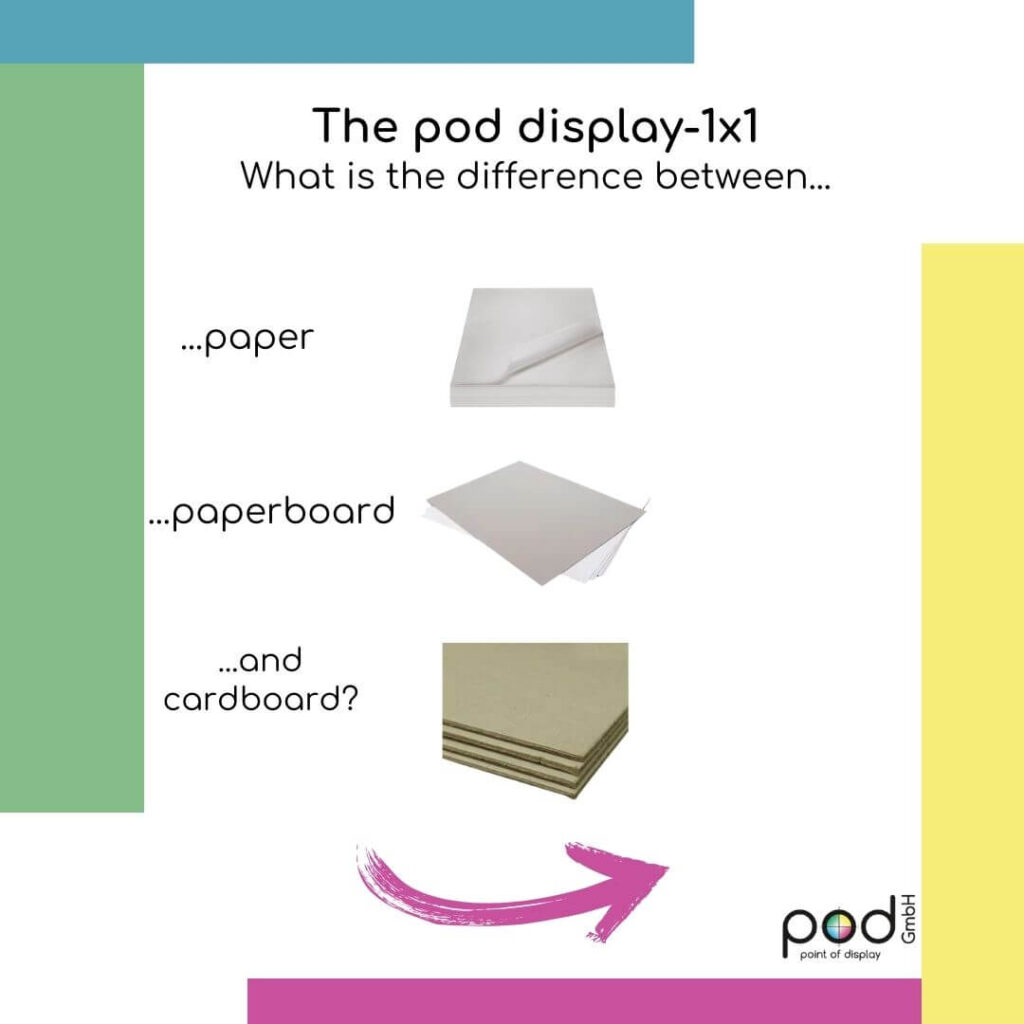
In our display world, we differentiate between the three materials primarily by their weight per square meter, also known as grammage or basis weight. This distinction helps us to select the right material for the respective requirements of our customers. Here is an overview:
Paper
Paper is the lightest material of the bunch. It has a grammage of 7 g/m² to 250 g/m² and is particularly flexible. Paper is ideal for applications where high stability is not required. It is inexpensive, easy to process and ideal for short-term applications.
At pod, we use paper for posters, assembly instructions or even for delivery bills and invoices. It is easy to print on and is available in different versions – depending on whether it is a one-off use or a long-term application.
Cardboard: Sturdy and versatile
Cardboard is stronger than paper and offers an excellent mix of flexibility and resilience. With a grammage of 150 g/m² to 600 g/m², cardboard is ideal for the production of displays and packaging. By laminating thinner cardboard onto
corrugated cardboard or cardboard, we can achieve additional stability at pod.
Cardboard is the preferred substrate for our displays as it offers both good durability and high print quality. Depending on the intended use, we process cardboard directly on our die-cutting machines after printing.
Cardboard: Robust and resilient
Cardboard is the heaviest and most robust of the three materials. With a grammage of over 600 g/m², it offers exceptional stability. Cardboard is the perfect choice for reinforced packaging and robust displays that require a particularly high load-bearing capacity.
Cardboard is used in our products when increased stability is required, for example to reinforce cardboard or for particularly stable packaging. Cardboard gives the displays the necessary resilience and ensures a long shelf life.
Conclusion: The right choice for every requirement
The main difference between paper, cardboard and paperboard lies in their grammage, which has a direct influence on the stability and resilience of the material. Depending on the individual requirements of our customers, we select the right material to offer the best possible solution for displays and packaging.
Whether you are looking for a flexible material for posters or a robust packaging solution – at pod we always make the right choice to meet your requirements perfectly!
